Student Projects
Every project starts with a real problem. Students identify it, imagine a solution, build it, and learn from the process.
Ecosystem & Adaptation of Living Beings
by Arbin Ram, Ansum, Basanta, Niruta, and Chandan · Bal Rastriya Secondary School · Kageshwari-Manohara
Students often find it difficult to understand concepts such as ecosystems, food chains, and how living organisms adapt to their environments through traditional classroom explanations alone.
Create an interactive learning project that helps students understand ecosystems and the adaptations of living beings through a visual and engaging digital experience.
A Scratch-based educational project that explains ecosystems, food chains, and the ways living organisms adapt to their surroundings. The project uses interactive elements to make these biological concepts easier for students to understand and explore.
The team learned how to turn a biology concept into an interactive digital learning experience using Scratch. They explored how ecosystems and adaptation can be explained visually, while also developing their coding, problem-solving, and teamwork skills.
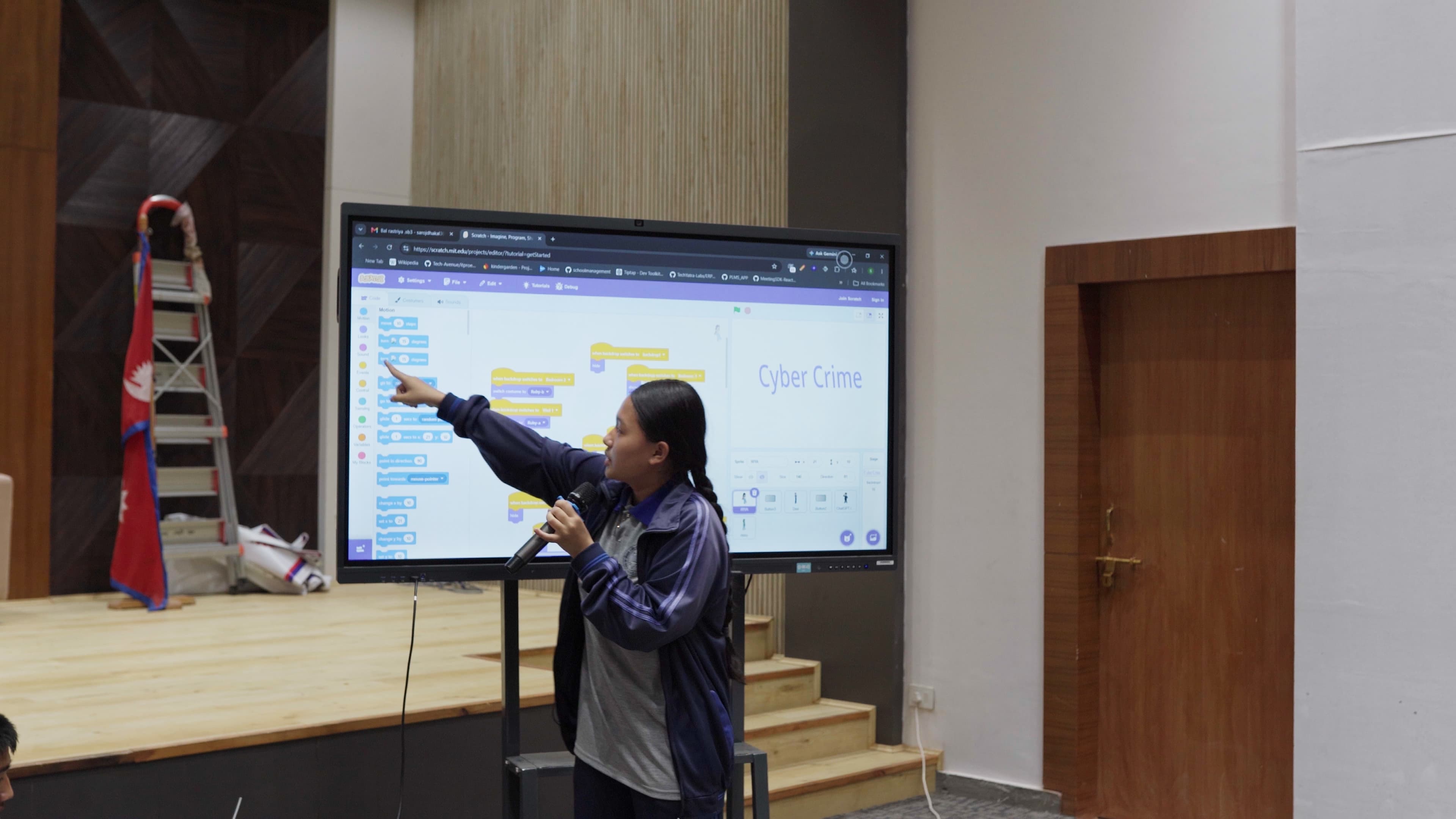
Mission: Dengue Free
by Samridhi Dotel, Rojina Tamang, Rajkumar Waiba, Rajina Rai · Nepal Rastriya Nirman Secondary School · Kageshwari-Manohara
Dengue continues to affect communities, while students and families may lack clear and engaging information about how dengue spreads and how it can be prevented.
Create an interactive Scratch project that uses a story and conversation to explain dengue, introduce the mosquitoes responsible for spreading it, and share practical prevention information.
An interactive Scratch-based dengue awareness project covering educational information about dengue, prevention guidelines, and common awareness gaps. The project uses storytelling and conversation to make the information easier for students and community members to understand.
The team learned how to use coding and storytelling to communicate information about a real community health problem. They also explored how technology can be used to spread awareness and turn important public-health information into an engaging learning experience.
Solar System Simulation
by Manish Singh Dadal, Samikshya Lama, Shikha Karki, Chandan Jaiswal, Alina Khadka · Tej Binayak Secondary School · Kageshwari-Manohara
Students often learn about the solar system through static images and textbook diagrams, making it difficult to visualize how planets move and revolve around the Sun.
Build an interactive simulation that shows the planets revolving around the Sun, helping students visualize planetary motion in a more engaging way
An interactive solar system simulation that visually demonstrates the revolution of planets around the Sun and allows learners to explore the solar system through movement rather than static diagrams.
They learned how to turn a science concept into an interactive digital experience, structure a simple simulation, and use technology to make abstract concepts easier to visualize. They also gained experience developing and presenting an idea as a team.
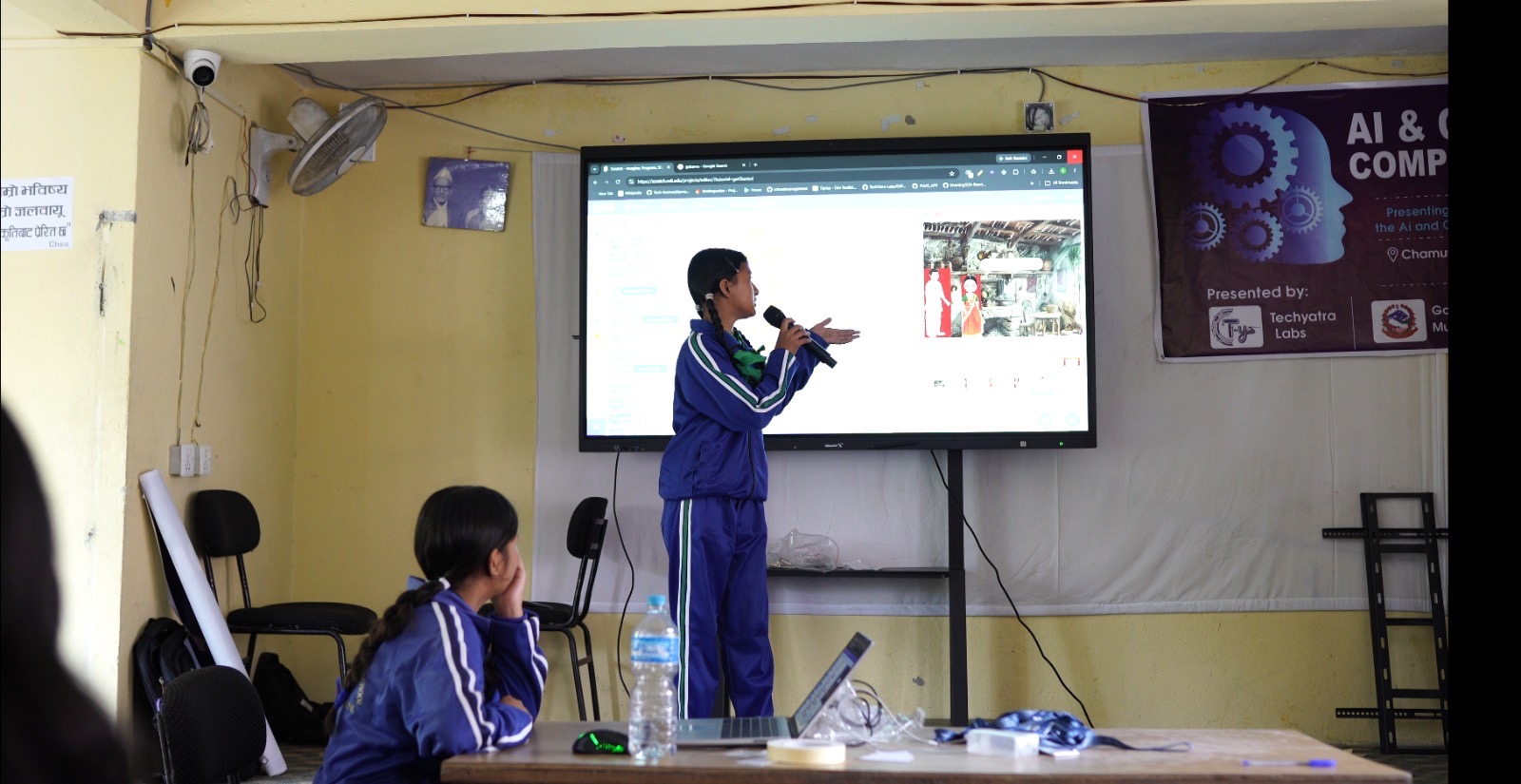
Daijo Pratha
by Nima Tamang, Andita Lama, Saraswati Katwal, Markib Ghale · Gokarna Secondary Schoo · Gokarneshwar
Dowry (Daijo) remains a social problem that can create financial and social pressure on families and contribute to inequality within communities.
Create an interactive digital project that raises awareness about dowry practices and encourages people to understand why the practice should be challenged.
A Scratch and AI-assisted awareness project that presents the issue of dowry through an interactive experience designed to help students and community members understand its social impact.
The team learned how technology can be used to communicate about real social problems and create awareness within their community. They also developed experience with Scratch, AI-assisted creation, teamwork, and presenting a social issue through a digital project.
From access to ability
How Student Projects Work
Each cohort follows the same process: students identify real problems, design solutions, build working prototypes, test with real users, and present what they created.
Find a Problem
Students identify real problems in their communities — things that affect their daily lives.
Design a Solution
They brainstorm approaches, sketch interfaces, and plan how their solution would work.
Build It
Using Scratch and other tools, students create working prototypes of their solutions.
Test and Improve
Projects are tested with real users. Students iterate based on feedback.
Present and Share
Each cohort ends with students presenting what they built to peers, teachers, and community members.
Real-World Impact
Some projects get adopted by local organizations. All students gain skills and confidence.
Have a school, community, or education program in mind?
We partner with schools, municipalities, and organizations to bring practical technology education to communities across Nepal.
Partner With Us